WanderPeng
Back to Blog

china

66 posts · Curated China travel tips

All Posts · 66

I took a client to a public hospital in Chengdu for a basic checkup last month. He’d been feeling off after a long flight from Sydney, and I figured we’d sort it out fast. Registration was 20 yuan (about $2.80). The doctor consultation was 30 yuan ($4.20). A blood test came to 50 yuan ($7). Total: 100 yuan — roughly $14 USD. He stared at the receipt like I’d handed him a winning lottery ticket. "This costs $800 in Australia," he said, shaking his head. And that’s the thing about Chinese public healthcare: it’s functional, efficient, and shockingly affordable. No frills, no long waits for basic stuff. We were in and out in under an hour. Now, I’ll be real with you — if you’re a first-time visitor and don’t speak Chinese, a public hospital can feel intimidating. The signage is mostly in Chinese, and the staff might not have strong English. That’s why, for major cities like Beijing, Shanghai, or Guangzhou, I always recommend international hospitals if you want English-speaking doctors. Places like **Beijing United Family Hospital** or **Shanghai East International Medical Center** are pricier (think $100–$200 for a consult) but offer a smoother experience for non-Mandarin speakers. Here’s a tip I give every client before they land: I prepare a small card with their hotel address written in Chinese, plus emergency numbers like 120 (ambulance) and 110 (police). I also include the address of the nearest international hospital. It fits in a wallet and saves so much stress. For routine stuff — a cold, a sprain, a checkup — public hospitals are totally fine. Just bring cash or have Alipay/WeChat Pay set up (though many now accept cards). If you’re booking ahead, platforms like **Trip.com** or **Booking.com** sometimes list recommended clinics. And for flights into Chengdu, you’ve got direct routes from London, Paris, Sydney, and Los Angeles — so getting here is easy. Bottom line: Don’t stress about healthcare in China. It works. And your wallet will thank you.

Jul 140

Every office in China has a tea setup. Mine has 4 types. When a client visits, I make tea first. Not small talk. Not a handshake. Tea. It says: we are not in a hurry. I once had a 3-hour meeting. We drank tea for the first hour before business. My Western colleague was frustrated. The supplier was testing our patience. We passed. Never rush the tea. Here's what I've learned after 15 years of navigating China's business culture—and how you can handle it like a pro, whether you're booking through Trip.com or catching a flight from LAX to Shanghai. ## Why Tea Matters In China, tea is the opening move. It's not about quenching thirst—it's about building trust. When a host pours you tea, they're saying, "I respect you enough to slow down." That first hour of sipping? It's a subtle test: Can you handle the pace? Are you in a rush to close a deal, or are you here for a relationship? I remember my first time. I was with a colleague from London, and we had a 9 AM meeting with a factory manager in Shenzhen. We sat down, and he started brewing oolong. My colleague kept checking his phone. The manager noticed. He poured slower. By the time we got to business, my colleague was ready to leave. We lost that deal. Lesson learned. ## What to Expect - **The setup**: Every office has a tea tray, usually with a kettle and multiple canisters. Don't be surprised if they offer you 3-4 types to choose from. - **The ritual**: You'll watch them rinse the cups, warm the pot, and pour with precision. This isn't a coffee run—it's a ceremony. - **The pace**: Meetings can last 2-3 hours, with the first 30-60 minutes dedicated entirely to tea. Use this time to chat about family, travel, or your flight over (Google Flights is great for checking routes like JFK to Beijing). ## Tips for First-Time Visitors 1. **Don't rush**: If you're in a hurry, reschedule. Rushing the tea is like skipping the appetizer at a Michelin-starred restaurant. 2. **Accept with both hands**: When they hand you a cup, take it with both hands—it shows respect. A simple "xiè xiè" (thank you) goes a long way. 3. **Sip, don't gulp**: Tea is meant to be savored. Small sips. And if you don't like the flavor, just sip anyway—it's about the gesture. 4. **Watch for cues**: When the host starts talking about pricing or schedules, that's your signal to shift gears. Until then, enjoy the tea. ## Real Talk: The Cost Tea setups vary. A basic one from a local shop might cost ¥200-500 (about $30-70 USD). My office has a mid-range setup with a Yixing clay pot—¥1,200 ($170). But it's not about the price. It's about the message: "I'm investing in this relationship." If you're booking a trip to China, expect this in any business meeting. Book your flights on Trip.com or Google Flights, and plan for extra time. A 2 PM meeting might not end until 5 PM. And that's okay. ## The Takeaway I've seen too many Westerners walk into a meeting, shake hands, and launch into a PowerPoint. That's a mistake. In China, business starts with tea. It's a test, a tradition, and a trust-builder all in one. Pass the test, and you'll have partners for life. So next time you're in Shanghai, Beijing, or Shenzhen, take a breath. Let them pour. And remember: never rush the tea.

Jul 140

My client from Singapore asked, \"You leave your phone on the table to save your seat?\" I laughed and said, \"I could leave a $1.50 water bottle (about ¥10) and it would still be there when I got back.\" He didn't believe me. \n\nDay 3 in Chengdu, he tried it. He left his phone on a table at a bustling street-side noodle shop while grabbing extra napkins. The look on his face when he returned said it all — pure disbelief mixed with relief. \n\nFirst-time visitors always tell me, \"I didn't expect China to feel this safe.\" And honestly, I get it. Coming from places where you'd never leave a bag unattended, the trust here can feel surreal. \n\n**What makes it feel so safe?**\n- **Widespread camera coverage**: Most streets, shops, and even quiet alleys have cameras. It's not intrusive — it's just there, like a silent guardian.\n- **Community awareness**: People look out for each other. In a busy Chengdu food market, a vendor once chased me down three blocks to return my phone that slipped out of my pocket. No reward, just a smile.\n- **Low crime rates**: Violent crime is rare, and petty theft is far less common than in many Western cities. I've left my laptop on a café table while ordering at the counter — it was still there 10 minutes later.\n\n**Tips for first-time visitors**\n- **Use common sense**: You still shouldn't flash expensive jewelry in crowded night markets. But feel free to relax your guard a little — you'll notice locals casually leaving bags on chairs while ordering.\n- **Book with trusted platforms**: For peace of mind, use Trip.com for hotels and train tickets, Booking.com for accommodations, and Google Flights for international routes. I always check Airbnb for unique stays in Chengdu's old neighborhoods.\n- **Carry a backup**: I keep a cheap phone (about $30/¥200) for street food runs. If it gets lost, no big deal. But in 15 years, I've never needed it.\n\n**A personal story**\nLast year, I was at a night market in Xi'an with my kids. My 8-year-old left her favorite stuffed panda on a bench. We realized it an hour later, and when we went back, a local grandmother was sitting there holding it, waiting for us. She said in broken English, \"Little girl's friend.\" That's China.\n\nSo yes, you can leave your phone on the table. But honestly, try leaving just a water bottle first — the confidence builds fast.

Jul 140

One of the "new three essentials" in China medical tourism that completely surprised me: eye exams and glasses. Foreign tourists get their eyes checked at Chinese hospitals, then head straight to the glasses market. Prices are a fraction of what they'd pay back home, frames are stylish, and everything's ready the same day. One blogger called it "the first time I didn't feel guilty about buying glasses." This trend reveals something important: medical tourism doesn't have to start with heart bypasses or organ transplants. Low-barrier, high-value, fast-delivery services — dental, optometry, health checkups — are the perfect funnel to build trust. Imagine flying into Shanghai on a direct flight from New York or London, spending a morning at a top-tier hospital for a comprehensive eye exam (around $30–60 USD, or ¥200–400 RMB), then walking to a nearby optical market where you can pick up designer frames and high-index lenses for as little as $50–150 USD (¥350–1,000 RMB). Compare that to $400–800+ back in the States or Europe. And the best part? You can pick them up before dinner. I've seen this firsthand with friends who combined a Beijing trip with a dental visit — same-day crowns for a third of the price they'd pay in the US, plus a few days exploring the Great Wall. Booking through platforms like Trip.com or Booking.com makes it easy to find hospitals with international patient departments, and Google Flights helps you snag a good deal on the airfare. For first-time visitors to China, this is a game-changer. You don't need a major medical procedure to experience the quality and affordability of Chinese healthcare. Start small — an eye exam, a cleaning at the dentist, a full health checkup package (often under $200 USD / ¥1,400 RMB for a comprehensive panel). It's a low-risk, high-reward way to test the waters. And trust me, once you see how seamless and affordable it is, you'll be planning your next trip around a few more "essentials."

Jul 130

I've seen people argue that "foreigners getting treatment in China is just mooching." That doesn't hold up. Chinese public hospitals charge international patients more than local rates — and strictly cap international patients at 10% of total volume. Foreign patients use extra capacity, not domestic resources. More importantly, they bring foreign currency and push hospitals toward international standards. I once picked up an American patient at Pudong Airport. His first words: "I trust Chinese doctors." That trust isn't earned by being cheap. It's earned by real results and professional care. ## How the Pricing Actually Works When you walk into a top-tier Chinese hospital like **Beijing United Family** or **Shanghai East International Medical Center**, the rates are clearly different for foreign patients. A consultation that costs ¥200 ($28) for a local might run ¥800 ($112) for an international patient. That's not exploitation — it's a tiered system that funds better services. **Here's the breakdown:** - **Local rates**: Subsidized by the government, accessible to Chinese citizens with social insurance - **International rates**: Market-based, often 3-5x higher, covering the same doctors and better amenities - **Payment**: You'll pay upfront or through international insurance (like Cigna, Allianz, or AXA) ## The 10% Cap Rule Hospitals that accept international patients are legally limited to 10% of total patient volume. That means if a hospital sees 1,000 patients a day, only 100 can be foreigners. This prevents any strain on the system. In fact, most hospitals I've visited — even in big cities like Shanghai or Beijing — rarely hit that cap. ## What Foreign Patients Bring to the Table This isn't just about money. International patients push hospitals toward global standards: - **English-speaking staff**: Many hospitals hire bilingual nurses and doctors - **International accreditation**: Hospitals like **Shanghai East** have JCI (Joint Commission International) certification - **Better equipment**: The revenue from foreign patients helps fund state-of-the-art MRI machines and surgical robots ## Real Story: A Patient Who Came for Care Last year, I helped a family from London book a flight on **British Airways** to Shanghai. The father needed spinal surgery — quoted at £45,000 in the UK. At **Huashan Hospital**'s international department, it cost ¥180,000 ($25,000) including a week-long stay and follow-up. He told me, "The surgeon trained at Harvard. I'd rather pay less and get world-class care." That's the reality. Foreign patients aren't taking resources — they're paying a premium for access to some of the best medical talent in the world. ## Practical Tips for First-Time Visitors If you're considering medical treatment in China: - **Book through Trip.com or Booking.com** for hospital-affiliated hotels (many offer discounts for medical tourists) - **Check Google Flights** for routes from LAX, JFK, or LHR to PVG or PEK — direct flights take 12-15 hours - **Get international health insurance** that covers China (like Cigna Global or Allianz Care) - **Bring a translator app** — though many international hospitals have English-speaking staff ## The Bottom Line China's healthcare system isn't a free ride for foreigners. It's a premium service that benefits everyone — local patients get better hospitals, and foreign patients get affordable, high-quality care. So next time you hear someone say it's mooching, you'll know the truth. Have you had medical treatment in China? I'd love to hear your story. Drop a comment below or reach out — I'm always happy to help first-time visitors navigate the system.

Jul 130

I was scrolling through Bloomberg's June cover story the other day, and one story stopped me cold. It's about a guy named Stuart Lye from New Zealand. He had multiple myeloma — a tough blood cancer — and no real options back home in Australia or New Zealand. So he did something that might sound surprising: he flew to Shanghai for a CAR-T clinical trial.\n\nNow, here's the part that made me sit up. His total cost — flights, accommodation, the whole shebang — was about **$65,000 USD** (around ¥470,000 RMB). In the US, the same CAR-T infusion? You're looking at **$300,000 to $475,000** — and that's just for the infusion, not the travel or lodging.\n\nLet that sink in.\n\nChina now has **7 approved CAR-T products** — that's the same number as the US. And get this: more CAR-T clinical trials are running in China right now than anywhere else in the world. We're not talking about 'budget' medicine here. We're talking about world-class treatment that just happens to cost a fraction of the price.\n\nI've been traveling to China for 15 years — as a mom of two, I've seen the healthcare system evolve firsthand. My kids had a ear infection in Beijing once, and the care we got at a top-tier hospital was faster and more thorough than anything we'd experienced back home. But this? This is a whole different level.\n\nSo if you're a first-time visitor to China and you're wondering, 'Is this just about cheap shopping and dumplings?' — no. It's about cutting-edge science, real innovation, and saving lives. And yeah, you can book your flights on **Trip.com** or **Google Flights** (direct routes from New York, London, Sydney, and Auckland to Shanghai are plentiful), find a hotel on **Booking.com** or **Airbnb**, and get yourself to a place that's quietly becoming a global powerhouse in medical research.\n\nThis isn't 'cheap.' This is smart.

Jul 130

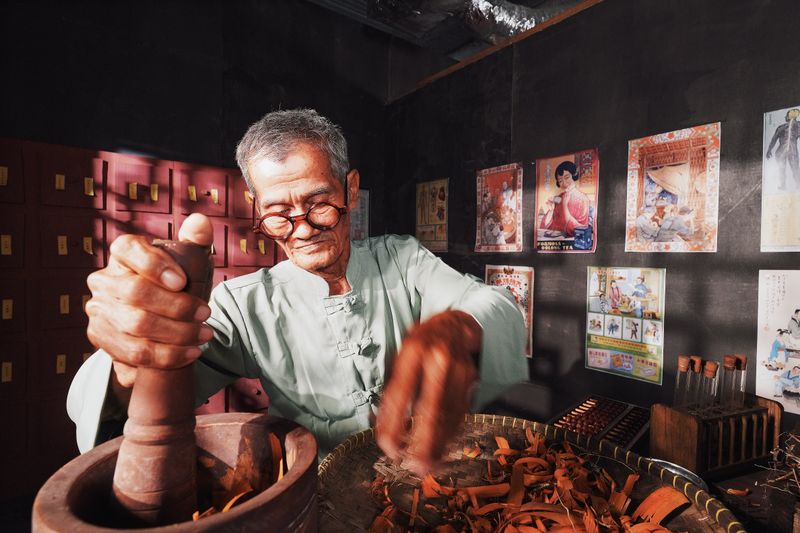
Something fascinating happened to my friend Kezia, a Malaysian tourist visiting China. She had a stubborn sore throat that wouldn't budge. Western clinics just kept handing her painkillers — you know the drill. But in China, a local friend suggested she try something different. She walked into a Traditional Chinese Medicine (TCM) clinic, got diagnosed with 'excessive internal heat' (what locals call *shanghuo*), and after just 30 minutes of cupping and scraping, she felt like a new person. Her TikTok video about it blew up — comments flooded in with people saying 'Same thing happened to me in China.'\n\nTCM has quietly become one of the 'new three essentials' for China travelers — right up there with a VPN and a reliable e-payment app. Acupuncture, cupping, moxibustion — these aren't just tourist gimmicks. They genuinely work for chronic pain, stress, and what the Chinese call 'sub-health' (that gray zone where you're not sick but not quite well). I've seen it firsthand with my own family. My mom's back pain? Gone after three sessions of cupping at a clinic near our home in Shanghai.\n\nBut here's the thing — it's more than just treatment. When you book a session on Trip.com or ask your hotel concierge for a recommendation, you're stepping into a 2,000-year-old tradition. The practitioner might ask about your sleep, your digestion, even your emotions. They'll feel your pulse and look at your tongue. It sounds weird at first, but it's deeply personal. You're not just getting a quick fix. You're participating in an ancient wisdom of living — one that sees your body as part of nature, not just a machine to be repaired.\n\nFor first-time visitors, I'd say: don't be shy. You can find TCM clinics in almost any Chinese city — from Beijing to Chengdu. Prices are reasonable too. A cupping session might cost around 100-200 RMB (roughly $14-28 USD). Just search on platforms like Dianping (think Yelp for China) or ask your hotel. And if you're worried about the language barrier, many clinics in tourist areas have English-speaking staff. Trust me, your throat (or your back, or your stress levels) will thank you.

Jul 130

You might have seen British blogger Amie's story. She had stomach pain, waited two years on the NHS for a gastroscopy. Frustrated, she flew to Beijing, spent ¥2,800 (about £300), got the scope done in 13 days — and they removed a polyp on the spot. People call this exceptional. From where I stand, this is China's healthcare system on an ordinary day: same-day registration, same-day exam, same-day results. Not because you're special — because that's how Chinese hospitals run. An American woman named Lizzy got an MRI in Kunming: ¥486 (about $67), done in 30 minutes. In the US, she'd wait three months and pay thousands. Speed itself is a form of medical quality.\n\nI've been traveling and living in China for 15 years, and I've seen this firsthand — whether it's a quick check-up or a more involved procedure, the efficiency is real. For first-time visitors worried about health issues popping up during their trip, here's the honest truth: you can walk into a major public hospital in any big city — Beijing, Shanghai, Guangzhou, Chengdu — register at the counter with your passport, see a specialist within an hour, and get blood work, an ultrasound, or even an MRI done the same day. Cash or Alipay/WeChat Pay works fine, and prices are a fraction of what you'd pay back home.\n\nBooking a flight from London to Beijing via Google Flights? Round-trip tickets often run $500–$800 in off-peak season. Compare that to the cost and wait time for a private MRI in the UK or US, and suddenly that trip pays for itself. I've recommended this to friends who needed dental work, eye exams, even minor surgeries — they all came back amazed.\n\nOf course, I'm not a doctor, and this isn't medical advice — always check with your own physician. But if you're planning a trip to China and have a nagging health concern, don't let it hold you back. The system here is built for speed and accessibility. Just bring your passport, know the name of your condition in Chinese (or use a translation app), and you're good to go.\n\n> **Quick tip:** Use Trip.com to book a hotel near a top-tier hospital like Peking Union Medical College Hospital in Beijing or Huashan Hospital in Shanghai. You can walk over, register, and be back in your room before lunch.\n\nSo yeah, Amie's story went viral — but for anyone who's spent time in China, it's just another day. If you're a first-time visitor, let this be your reassurance: China's healthcare system is one of its best-kept secrets for travelers.

Jul 130

I was catching up with a friend who runs a medical escort service over coffee last week, and he dropped a fascinating insight. Middle Eastern patients are flooding into China—but not for the typical checkups or wellness retreats you might expect. They're coming for specific surgeries. Spinal surgery. Bypass surgery. Second opinions on cancer diagnoses.\n\nThese aren't tourists with itineraries from Trip.com or Booking.com. They arrive with thick medical folders and CD scans tucked into their carry-ons. What they need isn't just a translator who can order them a meal—it's a team that can seamlessly integrate medical care with travel logistics. Think airport pickup straight to the hospital, pre-arranged consultations at international departments, and recovery-friendly hotel stays booked through Airbnb or local serviced apartments.\n\nI've been digging into this and compiling a list of international departments in Chinese hospitals. The numbers are eye-opening. In Shanghai alone, 13 designated hospitals handled 270,000 foreign patients last year. That's roughly $40 million USD (¥290 million RMB) in medical tourism revenue, and it's growing fast.\n\n**What these patients actually need:**\n- Pre-trip coordination: Flights via Google Flights or Emirates, connecting through Dubai or Doha to Shanghai Pudong or Beijing Capital\n- On-ground support: Bilingual medical coordinators who understand both healthcare and hospitality\n- Post-surgery care: Recovery-friendly accommodations with easy hospital access\n\n**Hospitals stepping up:**\n- Shanghai East International Medical Center: Handles everything from spinal surgeries to cardiac care\n- Beijing United Family Hospital: Popular for oncology second opinions\n- Guangzhou Overseas Chinese Hospital: Known for orthopedic procedures\n\nThe demand is clearly there. The real question is whether the service infrastructure can keep pace. For first-time China visitors—especially those coming for medical reasons—the experience needs to feel as smooth as booking a business-class ticket. No surprises, no language barriers, just seamless care from arrival to departure.\n\nIf you're planning a medical trip to China, start by checking the hospital's international department credentials. Most major hospitals now have dedicated international service centers with English-speaking staff. And don't forget to arrange travel insurance that covers medical evacuation—it's non-negotiable for procedures like spinal surgery.

Jul 130

Summer break is coming, and I've been getting inquiries from Australian families planning dental trips to China. One mum told me: braces in Sydney quoted at A$8,500 with an 8-month wait. Shenzhen? Full treatment for ¥22,000 (about A$4,500 or US$3,000), fitted on the first day of summer holiday. Then the family heads to Chengdu for pandas and Xi'an for the Terracotta Warriors. Kid gets braces, family gets a holiday, and it still costs less than waiting in Australia. Medical + tourism — that's China's smartest play. Here's how it works in practice: fly into Shenzhen via Hong Kong or direct from Sydney on a route like QF127, spend a few days getting the braces fitted (clinics like Shenzhen People's Hospital or private ones near Luohu are popular with expats), then hop on a high-speed train to Guangzhou for dim sum, or fly to Chengdu for a panda base visit. From there, Xi'an is a quick flight or train ride. Most families I know book flights through Google Flights or Trip.com, and use Booking.com or Airbnb for stays. The savings on dental work alone often cover the whole trip — flights, hotels, and meals included. For first-time visitors: don't stress about language barriers. Many clinics catering to international patients have English-speaking coordinators, and apps like Google Translate or WeChat's built-in translator work well. Payment-wise, clinics usually accept WeChat Pay or Alipay, but it's wise to bring a Visa or Mastercard as backup. And yes, the braces are the same quality — many use Invisalign or traditional brackets from brands like 3M. So if you're an Aussie family dreading the wait and price tag back home, consider this: a summer holiday that fixes your kid's teeth and gives you memories of pandas, warriors, and dumplings. It's not just a trip — it's a smart investment.

Jul 130

I just saw a number that made me pause: China's designated foreign-related hospitals received **1.28 million international patient visits in 2025** — a 73.6% increase from three years ago. Bloomberg ran a full feature on it, and honestly, it matches what I've been seeing on the ground for years. I've been in the China travel and medical tourism space for over a decade, and the shift is real. A few years back, people would come to me with vague requests like, "I heard China has good hospitals — can you help?" Now? They show up with PDFs. NHS waiting lists. U.S. insurance denial letters. Australian specialist referrals. They're not gambling on a rumor — they're being pushed by their own healthcare systems to find real solutions. ### What's driving this? - **Long waits at home** — In the UK, patients wait months for hip replacements. In Canada, MRI scans can take weeks. In the U.S., even insured patients face sky-high deductibles and denied claims. - **Cost** — A heart bypass in the U.S. can run $150,000+. In China, at a top-tier international hospital, it might be $20,000–$30,000 (roughly ¥140,000–¥210,000). Even with flights and a hotel stay on [Booking.com](https://www.booking.com), you're still saving tens of thousands. - **Quality** — Many of China's JCI-accredited hospitals (like those in Beijing, Shanghai, and Guangzhou) have English-speaking staff, modern equipment, and doctors trained in the U.S. or Europe. ### How people are getting there Most international patients fly into **Beijing Capital International (PEK)**, **Shanghai Pudong (PVG)**, or **Guangzhou Baiyun (CAN)**. Direct flights from London, New York, Los Angeles, Sydney, and Dubai make it easy. I always tell first-timers to book flights on [Google Flights](https://www.google.com/flights) or [Trip.com](https://www.trip.com) — the latter often has better deals for Asia routes. For accommodation near hospitals, [Airbnb](https://www.airbnb.com) has great serviced apartments in Shanghai's Jing'an district or Beijing's Chaoyang area, both close to major international hospitals. If you prefer a hotel, [Booking.com](https://www.booking.com) lists plenty with English-speaking staff. ### What to know before you go - **Visa** — Apply for a medical visa (S visa) or tourist visa (L visa) at your nearest Chinese embassy. The process usually takes 4–7 business days. - **Language** — Top hospitals have interpreters, but it helps to have a translation app like Google Translate or Pleco on your phone. - **Payment** — Most international hospitals accept international credit cards or wire transfers. Some even work with U.S. insurance for out-of-network reimbursement. - **Second opinions** — Many patients come just for a second opinion via video call first, then decide if they want to travel. ### Real talk This isn't just about cheaper healthcare. It's about *access*. When your home system says "wait six months" or "we don't cover that," people are voting with their feet. And China's hospitals — especially the foreign-related ones — are ready. If you're curious, start by checking hospital websites like **Beijing United Family Hospital** or **Shanghai East International Medical Center**. They have English pages and email contacts. You can also search on [Trip.com](https://www.trip.com) for medical tourism packages that bundle flights, hotels, and hospital appointments. > **Bottom line:** The 1.28 million number isn't just a statistic — it's a sign that global healthcare is changing. And for many, the best option is now a flight away.

Jul 130